
Household appliance electricity consumption and costs
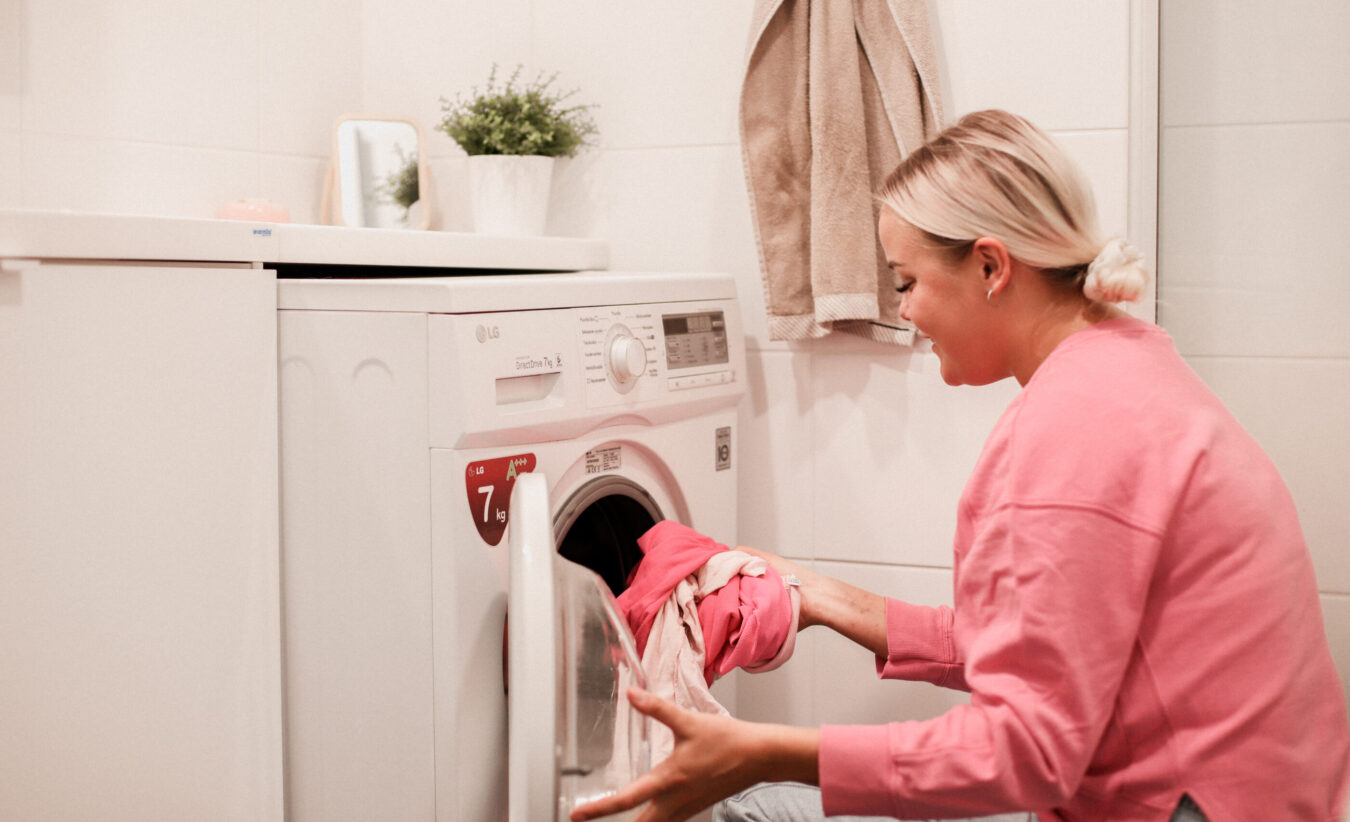
Your refrigerator hums around the clock, your washing machine runs a few times a week, and the TV plays in the background all day. But which household appliances use the most electricity? And how much do they cost per year? Read on to learn more about appliance electricity consumption!
Household appliance electricity consumption and costs – which appliances use the most?
The annual electricity consumption of an appliance depends on both its features and how often you use it and at which settings. That is why the type of appliance alone cannot tell you exactly how much electricity it uses.
The energy label and user manual indicate the annual electricity consumption the appliance is designed for. If you want to know how much electricity an appliance in your home actually uses, you can monitor it with a plug-in electricity usage meter.
Heating of rooms and domestic water often makes up the largest share of a home’s electricity use. In this article, however, we focus on the electricity consumption and costs of individual household appliances and electrical devices.
Electricity consumption by appliance
The table below shows the annual costs and electricity consumption of various household appliances. The figures are illustrative estimates based on a total electricity price of €0.15/kWh. Basic charges are not included.
If the combined price you pay for electricity and electricity distribution differs significantly from this, you can calculate the cost yourself using this formula: estimated annual consumption × total electricity price.
The appliance-specific kilowatt-hours used are estimates by AI.
| Appliance | Usage | Calculation assumption | Estimated annual consumption | Annual cost |
|---|---|---|---|---|
| Refrigerator | Continuous | Avg. power consumption approx. 17 W | 150 kWh | €22.50 |
| Freezer | Continuous | Avg. power consumption approx. 25 W | 220 kWh | €33.00 |
| Refrigerator-freezer | Continuous | Avg. power approx. 29 W | 250 kWh | €37.50 |
| Washing machine | 4 loads per week | Approx. 0.77 kWh/cycle | 160 kWh | €24.00 |
| Heat pump dryer | 3 loads per week | Approx. 1.54 kWh/cycle | 240 kWh | €36.00 |
| Dishwasher | 6 loads per week | Approx. 0.87 kWh/cycle | 270 kWh | €40.50 |
| Electric oven | Approx. 3–4 h/week | Avg. power consumption during use approx. 1 kW | 180 kWh | €27.00 |
| TV | 4 h/day | Power consumption 100 W | 146 kWh | €21.90 |
| Desktop computer and monitor | 3 h/day | Combined power consumption 200 W | 219 kWh | €32.85 |
| Router or modem | Continuous | Power consumption approx. 10 W | 88 kWh | €13.20 |
The annual electricity costs were calculated using this formula:
Annual electricity energy cost = annual consumption × €0.15/kWh
Keep in mind that an old appliance may use significantly more electricity than a new, typically more energy-efficient model. The appliance’s size and the cycle you use also affect consumption.
Biggest electricity guzzlers
The biggest electricity users in a home are usually not individual household appliances. In an electrically heated home, heating of rooms and domestic water typically use the most electricity. An electric sauna oven, an electric vehicle, and bathroom underfloor heating can also have a noticeable impact on consumption.
“Electric radiators, for example, use a lot of electricity.”
– Jakob Frants, Sales Manager, Vaasan Sähkö
Among individual household appliances and electrical devices, the following can use particularly large amounts of electricity:
- refrigerators and freezers, because they run around the clock
- dryers, because drying laundry requires heat energy
- electric ovens and other heat-producing appliances
- home electronics used for several hours a day
- old appliances with poor energy efficiency.
Refrigerator and freezer electricity consumption
Refrigerators and freezers use small amounts of electricity throughout the day and night. Since they are rarely switched off, energy efficiency makes a significant difference over their lifetime.
Setting the temperature colder than necessary, placing the appliance in a warm location, and opening the door frequently can all increase electricity consumption. Worn door seals, inadequate airflow, and dust buildup behind the appliance can also reduce energy efficiency.
Dryers, washing machines, and dishwashers
Electricity consumption in washing machines and dishwashers depends particularly on water heating, the selected cycle, and the wash temperature.
To get the most out of each wash, run full loads and choose the most energy-efficient cycle suitable for your laundry.
A dryer typically uses more electricity per cycle than a washing machine. However, electricity consumption can vary considerably between dryer models.
If you use your dryer frequently, remember to clean the lint filter regularly.
Home electronics and standby mode
The annual electricity consumption of TVs, computers, game consoles, and other entertainment devices depends primarily on their power consumption and how much they are used.
An individual device’s hourly electricity consumption may seem small. But if you regularly use it for several hours a day, its annual consumption adds up.
For example, a 100-watt TV used for four hours a day consumes about 146 kWh per year. At an electricity energy price of €0.15/kWh, this costs approximately €21.90 per year. If the same TV is on for ten hours a day, consumption rises to about 365 kWh and the cost to €54.75 per year.
In other words, the cost difference between four and ten hours of daily use is about €32.85 per year, or €2.74 per month. The impact of a single TV may not be substantial, but devices left on unnecessarily increase your home’s total electricity consumption.
Devices that run continuously, such as routers and modems, also use electricity. It is a good idea to switch off your TV, computer, and game console completely when you are not using them.
How to reduce electricity consumption from household appliances
Although the electricity consumption and costs of household appliances and other electrical devices are generally fairly modest, there are still opportunities for small savings.
Monitor your home’s electricity consumption. As a Vaasan Sähkö customer, you can view your energy consumption in our app or Online Service. You can also view your consumption data in Fingrid’s Datahub. Tracking changes in consumption can help you identify times and devices that use more electricity than usual.
Track your consumption more closely with Smart Home. Vaasan Sähkö Smart Home lets you monitor your home’s electricity consumption in real time. You can also let Smart Home automatically schedule your electric vehicle charging for the times when spot-price electricity is cheapest. The features are free for Vaasan Sähkö customers.
Use appliances efficiently. Run full loads, use eco cycles, and switch off devices you do not need.
Make use of eco cycles. An eco cycle’s long running time may seem counterintuitive, but it saves energy by, for example, heating water to a lower temperature. The length of a wash cycle alone therefore does not tell you how much electricity it uses.
Keep appliances in good condition. A clean filter, an intact door seal, and unobstructed airflow, for example, help an appliance work as intended.
Check energy labels when buying a new appliance. The energy label shows the appliance’s energy efficiency class and standardized energy consumption. If you are choosing between two appliances of the same size, compare their annual consumption as well as their prices.
Time your appliance use to suit your electricity contract. If you have a spot-price electricity contract, it may make sense to shift the use of appliances that consume a lot of electricity to lower-price periods. The Influencer contract also includes an own influence component, meaning that you can affect the total amount of your electricity bill by timing your consumption.
“Always keep safety in mind when using electrical appliances. For example, you should not leave a washing machine running unattended just to take advantage of cheaper electricity.”
– Jakob Frants, Sales Manager, Vaasan Sähkö
Expert: Jakob Frants, Sales Manager at Vaasan Sähkö
Jakob works as a Sales Manager at Vaasan Sähkö and helps customers find the electricity contract that best suits their situation. He has extensive experience of electricity markets and different types of contracts.

Frequently asked questions on household appliances
How much electricity does a refrigerator use per year?
Electricity consumption varies depending on the appliance’s size, age, energy rating, temperature setting, and location. In the example calculation in this article, the refrigerator uses 150 kWh per year. At an electricity price of 0.15 €/kWh, the annual cost is €22.50. You can check your refrigerator’s stated annual electricity consumption on its energy label.
How much does it cost to use a tumble dryer per year?
The cost depends on the dryer’s technology, the selected program, how damp the laundry is, and how often the dryer is used.
In the example in this article, a heat pump tumble dryer is used three times a week. Its estimated annual electricity consumption is 240 kWh, with an electricity cost of €36 at a price of 0.15 €/kWh.
Why does the eco program often take longer than a regular program?
A program’s duration alone does not determine its energy consumption. An eco program can save energy by using a lower temperature and heating the water more gradually, even if the cycle takes longer.
How do you calculate the running cost of an electrical appliance?
First, convert the total electricity price into euros per kilowatt-hour, then multiply that price by the appliance’s electricity consumption. If the appliance uses 200 kWh per year and the electricity price is €0.15/kWh, the calculation is:
200 kWh × €0.15/kWh = €30 per year
You also might be interested in
-
 Energy tips
Household appliance electricity consumption and costs
Your refrigerator hums around the clock, your washing machine runs a few times a week, and the TV plays in…
-
 Topical
Price locking adds flexibility to your spot-price electricity contract
Even with a spot-price electricity contract, you can now plan ahead for winter bills. Price locking allows you to predetermine…
-
 Food & Recipes
The best apple crumble of the autumn – with caramel and salted peanuts
Take the classic oat and apple crumble, add some caramel sauce and salted peanuts, and the result is simply irresistible.…