Pulse charging could revolutionize battery technology
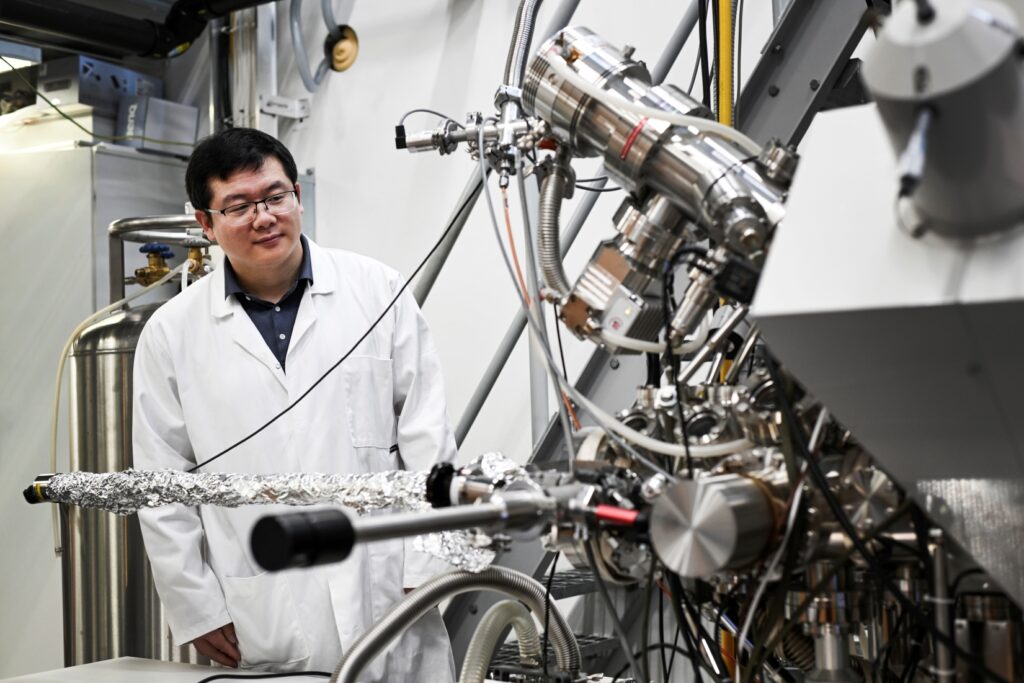
Extending battery life is becoming increasingly important in an electrifying world. Yaolin Xu, Assistant Professor at the Department of Applied Physics at Aalto University, is researching how pulse charging could make batteries last longer and improve their safety.
The idea: Focusing on charging
As part of the Fast-Charging Future Batteries (FAST) project, Xu is investigating how the lifespan of future batteries can be extended by using so-called pulse charging instead of conventional constant-current charging.
“In pulse charging, current is supplied for a short period and then interrupted briefly. This cycle is repeated regularly,” Xu explains.
In earlier research, he observed that pulse charging could even double the lifespan of NMC-graphite batteries. These batteries are commonly used in devices such as laptops and electric vehicles.
Fast-Charging Future Batteries (FAST)
The FAST project was launched in January 2026. Xu leads the research, and his eight-member research group also employs students and research assistants.
FAST is funded by Technology Industries of Finland’s Future Makers programme, which supports projects that promote innovation and sustainable solutions for the future.
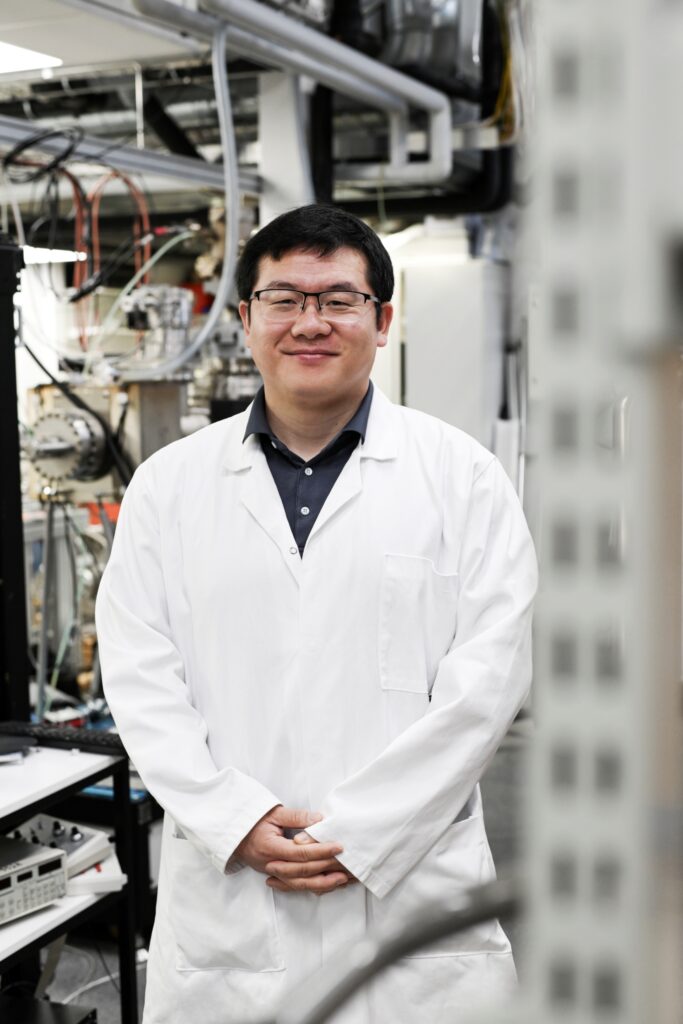
It is not yet known whether pulse charging works with other battery types. Together with his research group, Xu aims to develop pulse-charging models and battery designs that would enable pulse charging to be used in future battery technologies as well.
The impact: Significantly longer battery life
Xu’s goal is to use improved modelling methods and optimize the pulse-charging-based charging technique so that the lifespan of future batteries can be extended regardless of charging speed. At present, fast charging, such as charging an electric vehicle at a high-power charging station, causes changes in battery materials that reduce battery life.
“My goal is to achieve a twofold increase in battery lifespan even when batteries are charged at an ultra-fast 5C rate.”
A 5C charging rate means that a battery can theoretically be fully charged in 12 minutes.
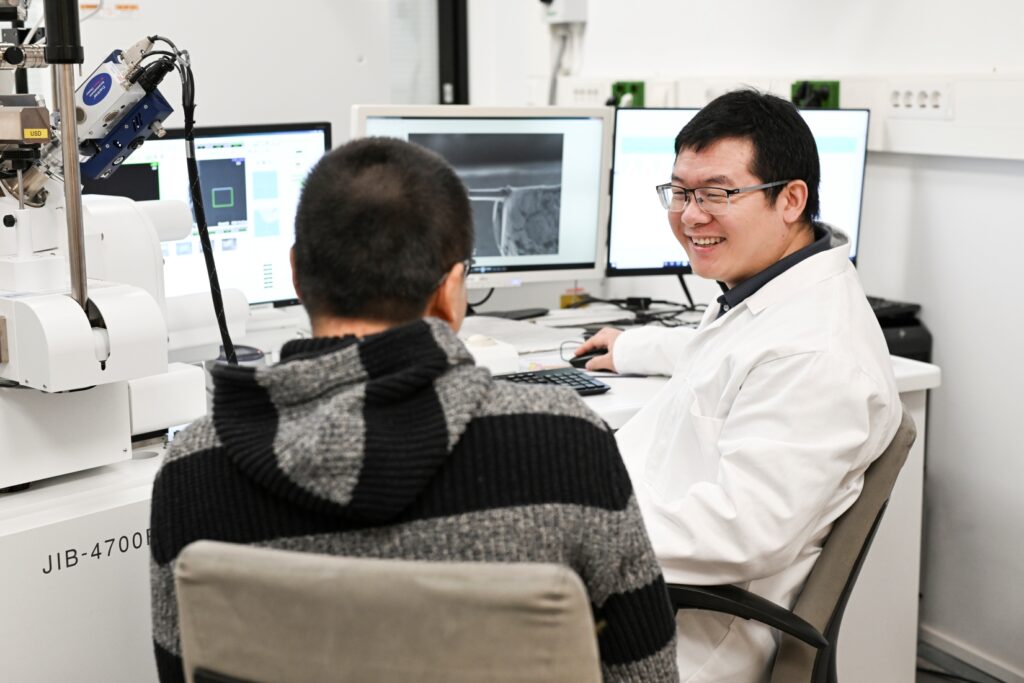
The FAST project also aims to improve charging safety by reducing the growth of so-called dendrites. These are needle-like metal crystals that form inside batteries during charging and discharging.
“Many battery-related accidents in electric vehicles are caused by dendrites.”
The future: A wide range of applications
According to Xu, some companies are already developing prototypes of fast chargers based on pulse-charging technology, although they are not yet commercially available. In the future, however, electric vehicles may well be charged at service stations using this type of chargers.
He emphasises that the FAST project focuses not only on pulse charging but, above all, on improving battery models. These models can also support the development of battery management systems.
“A good battery management system is essential, for example, in power grids where renewable energy is stored in batteries.”

Text: Elina Vironen
Photos: Kirsi-Marja Savola
You also might be interested in
-
 Energy tips
Cut your electricity bill with smart energy solutions
A variety of smart solutions optimize household energy use, helping lower electricity bills. The greatest saving opportunities are typically found…
-
 Market analysis
Electricity market review: Autumn 2026
Following a year of exceptionally dry weather, hydroelectric reservoir levels in the Nordic countries are below average, and at the…
-
 Topical
The situation in the Middle East shows no signs of easing – What it means for Electricity Prices
Traffic through the Strait of Hormuz remains largely disrupted. The situation, which has continued for more than six months, shows…