
6-month electricity contract – lock in your electricity price without a long commitment
A fixed-term electricity contract for six months is a flexible option if you want to lock in your electricity price for a limited period. For many customers, it provides peace of mind during the winter: they may use a spot-priced contract during the summer and switch to a fixed price for the winter season.
Lena Lainio, Head of Sales Business at Vaasan Sähkö, explains the benefits of a six-month fixed-term electricity contract.
A 6-month electricity contract offers a balance between security and flexibility
With a six-month fixed-term contract, your electricity price is fixed for half a year. The price remains unchanged throughout the contract period, and after six months you can review the market situation and choose a new contract that suits your needs.
A six-month contract provides short-term price certainty without requiring a long commitment.
At Vaasan Sähkö, the six-month fixed-term contract is called Fixed. The electricity is generated using nuclear power, meaning no carbon dioxide emissions are produced during electricity generation.
”Many customers use a six-month contract as a kind of winter safeguard. They may have a spot-price contract during the summer but choose a fixed price to avoid winter price spikes. Others take a short fixed-term contract for their summer cottage during the winter season.”
Lena Lainio, Head of Sales Business, Vaasan Sähkö
For whom is a 6-month electricity contract suitable?
A six-month fixed-term electricity contract may be right for you if you:
- want to lock in your electricity price for a short period,
- want protection against winter price spikes,
- believe market prices may change in six months and want the option to switch to a spot-price contract or a longer fixed-term agreement at that time, or
- are planning to move.
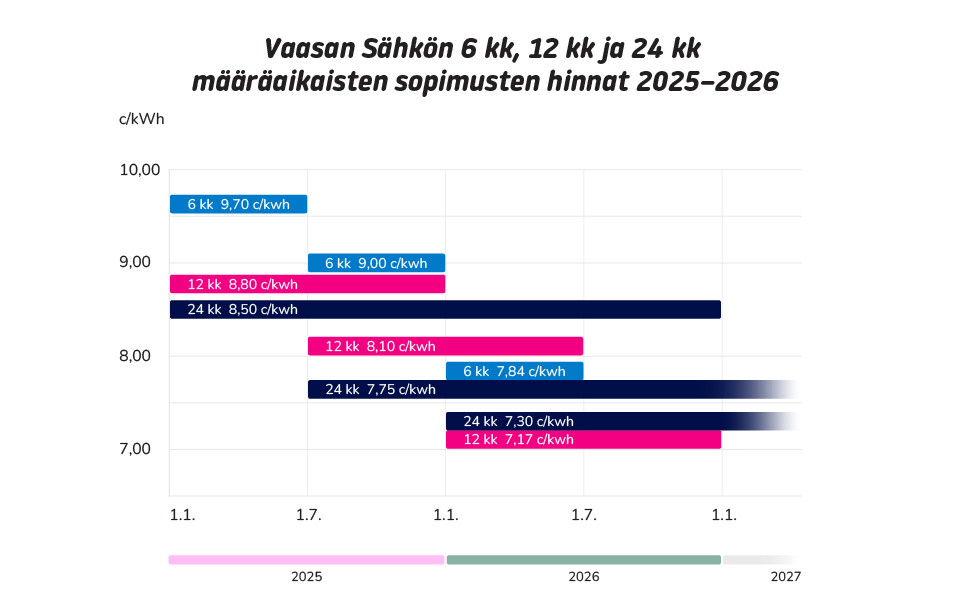
The electricity prices in 2025 and 2026 for 6, 12, and 24-month contracts are compared in the table above.
What should you know about a 6-month electricity contract?
Six months is a relatively short period, so it is worth planning ahead and considering your next contract well before your current one ends.
- The timing of your contract affects the price. Contracts signed in spring or summer are often more affordable. If the contract includes several winter months, the price is typically higher.
- If your contract expires in the middle of winter, prices for new contracts may be higher than average.
- If you do not choose a new contract when the fixed-term period ends, the contract will continue as an open-ended agreement at the prices valid at that time.
3 reasons to choose a 6-month fixed-term electricity contract
- Enjoy peace of mind without a long commitment.
- A six-month contract provides price certainty while keeping your options open.
- Protect your household budget from winter price spikes.
- A fixed price makes it easier to predict your electricity costs, especially during colder months when consumption is higher.
- Take advantage of lower prices later.
- If your contract ends in spring, you can easily switch to a spot-price contract or sign a longer fixed-term agreement, often at a more favorable price.
Lena Lainio’s tip: If you are interested in following electricity prices to some extent but do not want to carry the full risk of a spot-price contract, you can choose the six-month Fixed Influencer contract. It combines features of both fixed-price and spot-price electricity contracts.
6, 12, or 24 months? How fixed-term electricity contracts differ
If you wonder how the different fixed-term contracts differ from each other, you can compare their pros and cons in the table below.
| Contract validity | Suitable for | Main benefit | Keep in mind |
| 6 months | Customers who follow electricity prices to some extent and want to lock in the price only for a short period. | Flexibility and the opportunity to sign a new contract quickly. Works well, for example, as a winter-season contract. | Consider the timing carefully. If the contract expires in the middle of winter, new contracts may be more expensive. |
| 12 months | Customers who want predictability and stability for a moderate period. | A balance between price certainty and flexibility. It protects against winter price spikes and makes budgeting easier. | You are committed for one year and cannot benefit from potential price decreases or switch contracts during the contract period. |
| 24 months | Customers who want long-term predictability and price certainty and prefer not to think about electricity prices in their daily lives. | Long-term peace of mind and easier budgeting. The contract protects against price spikes over two winter seasons and is often more affordable than shorter fixed-term agreements. | You are committed for two years and cannot benefit from potential price decreases or switch contracts during the contract period. |
Expert: Lena Lainio, Head of Sales Business at Vaasan Sähkö
Lena is responsible for sales to major and minor customers, service sales, and product management.

You also might be interested in
-
 Energy tips
Cut your electricity bill with smart energy solutions
A variety of smart solutions optimize household energy use, helping lower electricity bills. The greatest saving opportunities are typically found…
-
 Market analysis
Electricity market review: Autumn 2026
Following a year of exceptionally dry weather, hydroelectric reservoir levels in the Nordic countries are below average, and at the…
-
 Topical
The situation in the Middle East shows no signs of easing – What it means for Electricity Prices
Traffic through the Strait of Hormuz remains largely disrupted. The situation, which has continued for more than six months, shows…